
“I’m interested in bringing to light that which is hidden or sealed within.”
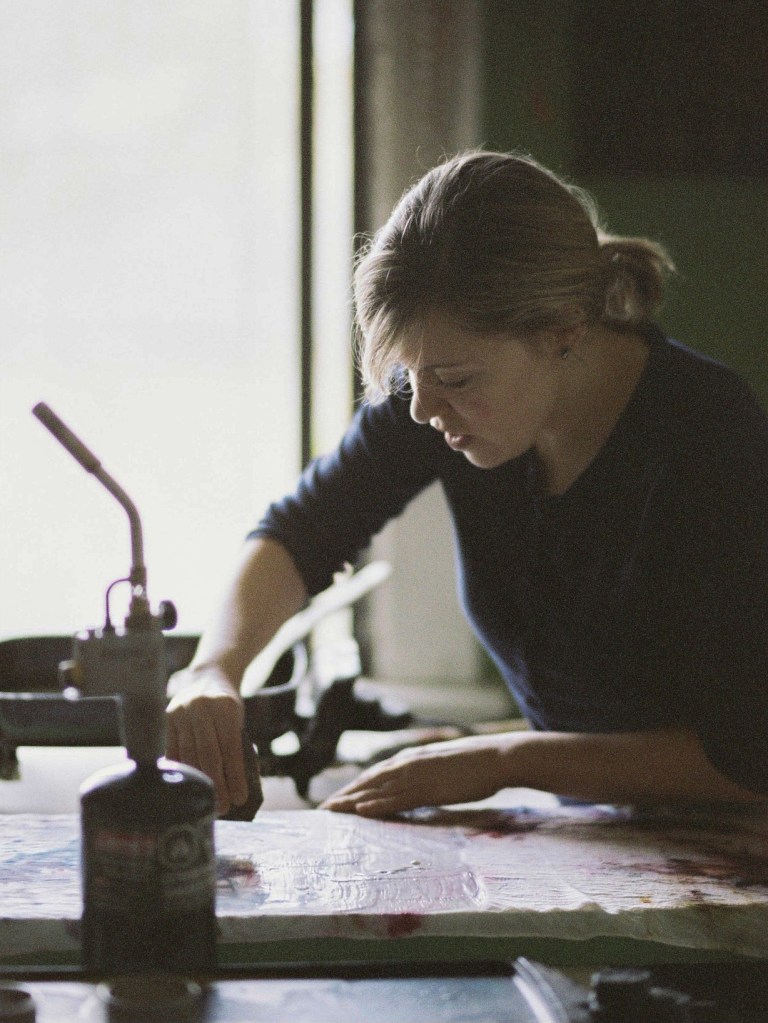
Katrina Grabner is a visual artist, art therapist, trauma counselor, writer and professor residing on the stolen unceded territory of the Coast Salish peoples, including the Xʷməθkʷəy̓əm (Musqueam), Skwxwú7mesh Úxwumixw (Squamish), Sel̓íl̓witulh (Tsleil Waututh) Nations. Often drawn to creating site specific installation works, Grabner through mediums such as encaustic (from the Greek word ‘enkaustikos’, meaning to burn-in), ceramics, paint and fiber, explores themes of identity, place, embodiment, myth and collective healing. Grabner holds an MA in Psychotherapy and Spirituality with a specialization in Art Therapy through St Stephen’s College, an affiliate college of the University of Alberta. Originally from Treaty 6 Territory, just west of the Rocky Mountains Grabner locates herself through her German, Scottish, Irish, Mi’kmaq and French ancestors. Katrina Grabner founded Open Book Art Collective and has participated in numerous shows at galleries such as Silk Purse Arts Centre, Massy Arts Society, Britannia Art Gallery, Langley Centennial Museum and Exhibition Centre, Seymour Art Gallery as well as participated in MAWA’s mentorship foundation program. Through her works Katrina’s hope is to encourage curiosity, play, wonder, conversation and deeper connection with self and other.
e-mail: katrinagrabner@gmail.com
What is encaustic art?
The word encaustic comes from the Greek word Enkaustikos, which means to burn in. It was first used three thousand years ago when ancient ship builders used the combination of wax, resin and pigments to seal, waterproof and decorate their ships. Encaustics consist of natural beeswax and dammar resin (crystallized tree sap). The medium can be used alone or it can be pigmented. Heat is used throughout the process, from melting the beeswax to fusing the layers of wax. Encaustic medium is known for its luminous, transparent, adhesive and archival qualities.
(Encaustic Art, Jennifer Margell) (Encaustic Art Institute, http://www.eainm.com/what-is-encaustic/)
 katrinagrabner.com